
Spec-Zone .ru
спецификации, руководства, описания, API
|
|
Spec-Zone .ru
спецификации, руководства, описания, API
|
The Context interface contains methods for adding, replacing, and removing a binding in a context.
Context.bind() is used to add a binding to a context. It accepts as arguments the name of the object and the object to be bound.
Before you go on: The examples in this lesson require that you make additions to the schema. You must either turn off schema-checking in the LDAP server or add
// Create the object to be bound
Fruit fruit = new Fruit("orange");

// Perform the bind
ctx.bind("cn=Favorite Fruit", fruit);
This example creates an object of class
Fruit and binds it to the name "cn=Favorite Fruit" in the context ctx. If you subsequently looked up the name "cn=Favorite Fruit" in ctx, then you would get the fruit object. Note that to compile the Fruit class, you need the
FruitFactory class.
If you were to run this example twice, then the second attempt would fail with a NameAlreadyBoundException. This is because the name "cn=Favorite Fruit" is already bound. For the second attempt to succeed, you would have to use .
rebind() is used to add or replace a binding. It accepts the same arguments as bind(), but the semantics are such that if the name is already bound, then it will be unbound and the newly given object will be bound.
// Create the object to be bound
Fruit fruit = new Fruit("lemon");

// Perform the bind
ctx.rebind("cn=Favorite Fruit", fruit);
When you run
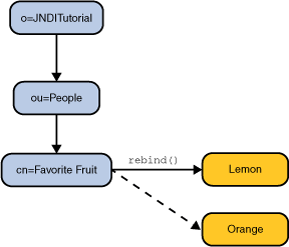
To remove a binding, you use unbind().
// Remove the binding
ctx.unbind("cn=Favorite Fruit");
|